
Cooperative Learning: A Practical Guide for Teachers
KBy KAdemiq Team7 min read
A group of four students submits a correct answer. At first glance, the activity looks successful. But what if one student wrote the answer while the others watched? The distinction between sitting in a group and learning together matters.
Cooperative learning is more than a seating arrangement or a list of roles. It is a structured way to work towards a shared goal, with each learner contributing to the task and remaining accountable for their own understanding. This guide explains its key elements and offers a classroom example you can adapt to different subjects and learners.
What is cooperative learning?
Cooperative learning is an instructional approach in which students work in small groups towards a shared goal. They exchange ideas, explanations and support to complete a task. The teacher designs the activity, helps create opportunities for participation, observes the process and checks what each learner has understood.
In conventional group work, students may produce a shared answer without all of them participating or understanding it. In a carefully designed cooperative activity, the quality of the group answer is not the only concern: each learner's contribution and understanding matter too. This does not mean everyone must participate in exactly the same way. Teachers can offer different ways to express ideas and support learners according to their needs.
The five elements of cooperative learning
The University of Minnesota's guide to cooperative learning describes five elements that help turn a collection of students into an intentionally cooperative group:
- Positive interdependence: Students understand that the shared goal depends on contributions from the group. For example, each member may bring a piece of information or an idea that helps the team explain a problem.
- Individual and group accountability: The group is responsible for completing the task, while each learner is responsible for contributing and understanding the content. An individual question or exit ticket can help the teacher check this.
- Supportive interaction: Students explain their thinking, ask questions, listen to one another and offer constructive help or feedback.
- Social skills: Listening, respecting different views, asking for help and making decisions are skills to teach and practise, not abilities to assume every learner already has.
- Group processing: Students take a short moment to reflect on their collaboration: What helped us? What is one thing we will improve next time?
These elements work together. Clearly assigned roles can help, but they are not enough if learners do not understand the goal, have opportunities to explain their ideas or receive a check on their individual understanding.
A classroom example: Why did the plant wilt?
The example below is illustrative; it is not presented as an activity taken from the course. A science or reading teacher can adjust the content to the age and needs of the class.
Learning goal: Each student suggests an explanation for a wilted plant and supports it with evidence from the text or information provided.
Shared task: The group reads a short description of the plant, chooses a plausible explanation and prepares a shared answer identifying its reasoning and evidence. Members might receive different observations about light, water and soil, with accessible materials and support available to everyone.
Possible roles: One student reads the task, another helps collect ideas, a third invites contributions, and another checks the proposed evidence. Roles organise interaction; they do not replace everyone's contribution or the assessment of individual learning.
A 15-minute sequence:
- 2 minutes: Explain the goal, task and criteria for an effective answer. Check that the instructions are understood.
- 3 minutes: Give each learner time to read the information and consider an initial explanation, with help or alternatives to reading where needed.
- 5 minutes: Each member shares an idea and evidence. The group asks about differences and selects a shared explanation.
- 3 minutes: The group formulates an answer connecting the explanation to evidence and checks whether everyone has had an opportunity to contribute.
- 2 minutes: Each learner writes or communicates a personal explanation and its evidence. The group names one way to improve its collaboration.
Adjust the timing to the class. The important point is that the task is manageable and every learner has a genuine opportunity to think and participate—not that every class follows the same clock.
Assess learning, not just the finished product
Start with a clear criterion for the group's answer, then gather a small piece of evidence of each student's understanding. This could be a short spoken response, an individual written answer or an annotated drawing if it better suits the learner and objective. During discussion, notice who explains their reasoning and who needs support, not simply who speaks most.
Avoid relying on a group mark alone to judge individual understanding. If responses show that some learners have not grasped the idea, use that information to provide further explanation or redesign the task, rather than embarrassing students in front of their peers.
Common challenges and practical responses
One student dominates: Give everyone thinking time before discussion, then use short rounds that invite each learner to contribute without insisting on a single mode of expression.
Roles become labels: Connect each role to an observable action, such as gathering explanations or asking for evidence. Rotate roles across activities so students can practise different skills.
The group finishes quickly, but understanding is uncertain: Ask for an individual explanation at the end and compare it with the lesson goal, not with the group's speed.
Some learners face barriers to participation: Prepare accessible texts, additional time or suitable communication supports. Check that every student can access the information and the task. Fair participation does not require identical participation.
The teacher steps back entirely: The teacher still clarifies the goal, observes the conversation, offers guidance where needed and uses those observations to improve the next lesson.
What does the evidence say?
The Education Endowment Foundation's review of collaborative learning reports a positive average impact across the studies it reviewed, alongside variation in results and limitations in the strength of the evidence. It emphasises the importance of task design, pupil participation and monitoring implementation in each school's context.
That does not mean every group activity will produce improvement, or that an average research finding will apply to every classroom. A sound starting point is to try an activity suited to the learning goal, observe what students learn and adapt the design to what actually happens.
Try it in your next lesson
Choose one clear objective and design a question that benefits from exchanging ideas rather than one student working alone. Decide what the group will produce and how you will check each individual's understanding. Teach a simple discussion prompt, such as “What evidence supports that idea?”, and leave a final minute to review the collaboration.
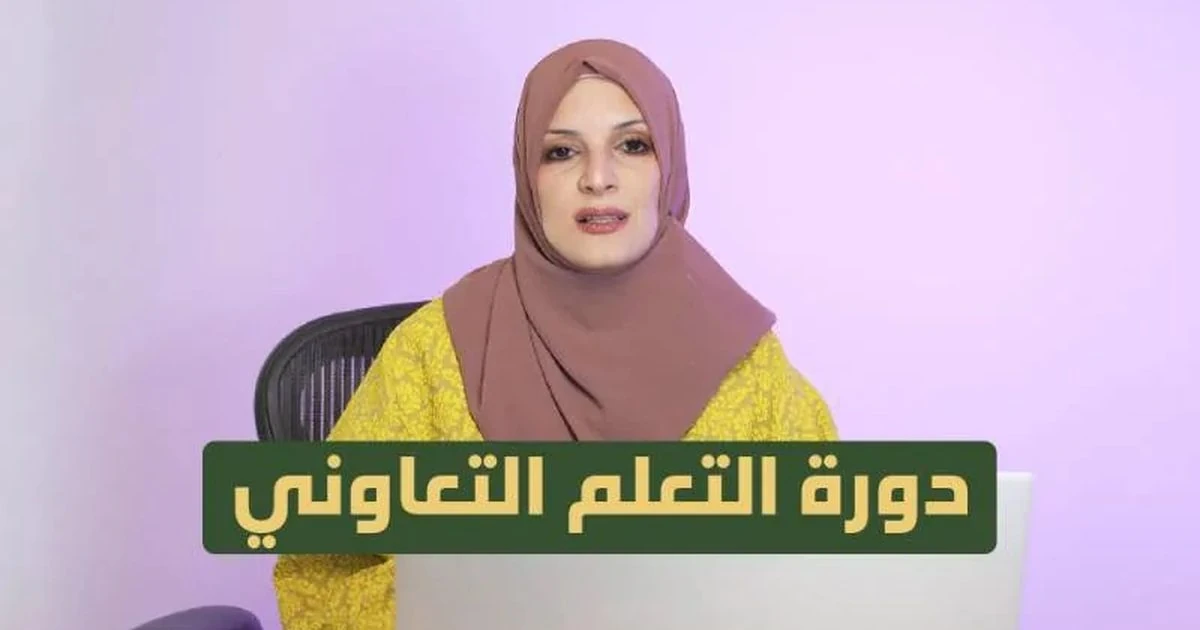
To explore the concept, select strategies and organise groups and roles, visit Cooperative Learning with Doha Kabalan. The course is for teachers, educational supervisors, trainers and others working in education. It is taught in Arabic.
Frequently asked questions
Can cooperative learning work across subjects?
It can be adapted to different subjects and age groups when the task serves the lesson objective and suits the learners. Not every part of a lesson needs group work: individual reading or direct instruction may be more appropriate for some goals.
How many students should be in a group?
There is no single number that suits every class. The Education Endowment Foundation review notes promising results for groups of 3 to 5 pupils in the studies it examined, but the practical choice depends on the task, time available and learners' needs.
Are assigned roles enough?
No. Roles are useful when they support a shared goal and genuine interaction, but they do not replace individual accountability, explicit teaching of discussion skills or checks on each learner's understanding.